Introduction
Choosing the right optical fiber can significantly affect the speed, stability, and future scalability of your network. One of the most common questions among network engineers, IT professionals, installers, and business owners is single mode vs multimode. Although both fiber types transmit light instead of electrical signals, they are designed for different purposes and offer unique performance advantages.
Understanding single mode vs multimode helps prevent unnecessary expenses while ensuring your network performs efficiently. Many organizations purchase fiber cables without fully understanding transmission distance, bandwidth capabilities, attenuation, connector compatibility, or installation requirements. As a result, network upgrades often become expensive because the wrong cable type was selected initially.
When discussing single mode vs multimode, transmission distance is usually the first difference people notice. However, the comparison extends much further. Installation environment, laser compatibility, maintenance requirements, outdoor durability, long-term investment, and overall reliability all play important roles when selecting the appropriate cable.
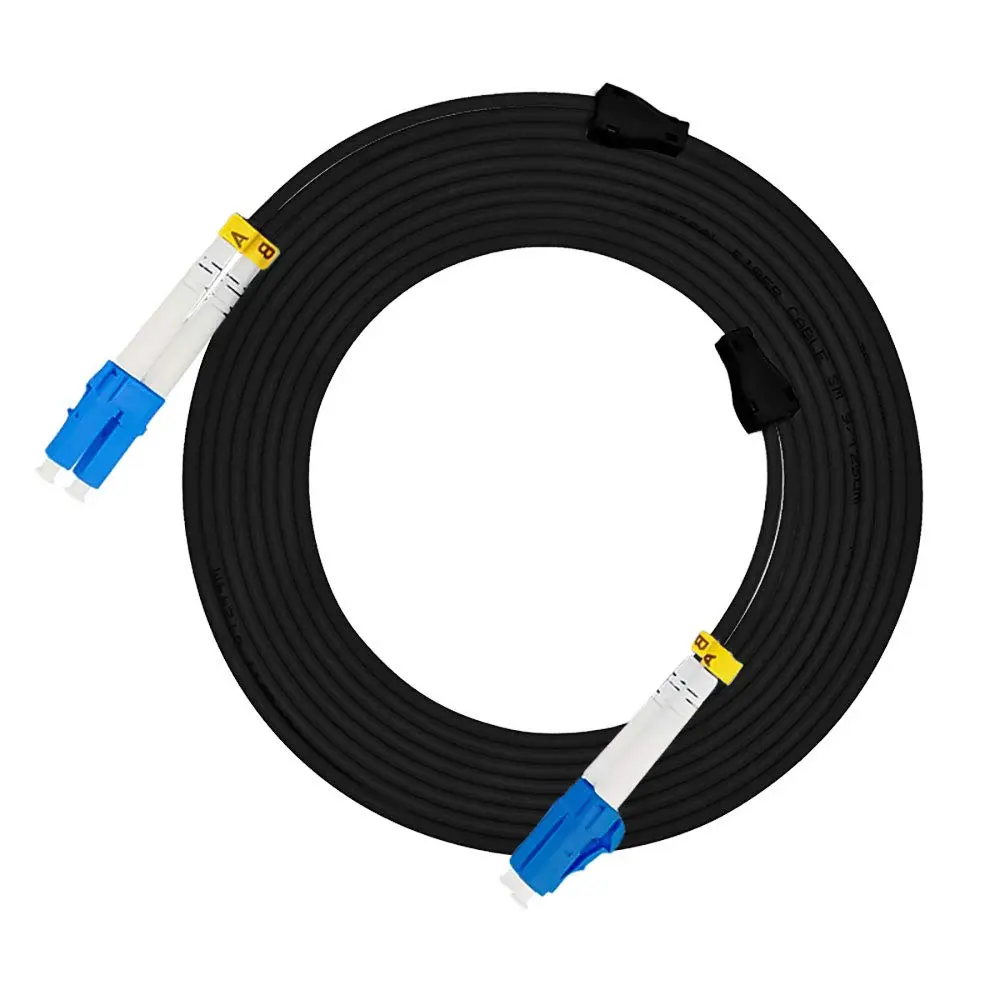
The featured product in this guide is the 250M LC to LC Outdoor Armored Duplex 9/125 SM Fiber Optic Cable Jumper Optical Patch Cord Singlemode 250Meters 820ft LC-LC. This premium outdoor cable represents an excellent example of modern single mode fiber cable technology designed for professional installations where durability and dependable signal transmission are essential.
Unlike ordinary indoor fiber, this outdoor armored cable includes a protective metal sheathing covered by a rugged weather-resistant jacket. The cable is built to withstand sunlight, moisture, dust, and demanding outdoor conditions while maintaining excellent optical performance. Ceramic LC connectors further minimize insertion loss, making it suitable for carrier-grade communication systems.
Throughout this guide, you’ll learn the real differences in fiber optic single mode vs multimode, understand how single mode vs multimode fiber behaves in practical deployments, discover when polarization maintaining technology becomes valuable, and determine whether this outdoor armored cable is the right solution for your networking project.
Understanding Fiber Optic Communication
Fiber optic communication transfers information using pulses of light rather than electrical current. Because light travels through glass with extremely low loss, optical fiber supports much higher bandwidth and longer transmission distances than copper cables.
Modern communication networks rely on fiber optics because they offer:
- Extremely high bandwidth
- Long-distance communication
- Low electromagnetic interference
- Better network security
- Lower latency
- Excellent reliability
- Future-proof infrastructure
Whether you’re building an enterprise network, connecting multiple buildings, expanding an ISP backbone, or deploying industrial automation, understanding multimode is the first step toward selecting the correct infrastructure.
What Is a Single Mode Fiber?
A single mode fiber cable is designed with a very small core, typically measuring about 9 microns in diameter. Because only one light path travels through the fiber, internal reflection remains highly controlled, dramatically reducing signal distortion over long distances.
This focused light transmission is the primary reason single mode comparisons usually favor singlemode for long-range networking.
A professional single mode fiber cable typically includes:
- 9/125 micron core and cladding
- Laser light source compatibility
- Very low attenuation
- High bandwidth potential
- Long-distance transmission
- Stable optical performance
The featured 250-meter outdoor armored cable uses this proven 9/125 configuration, making it suitable for professional networking environments requiring dependable performance.
Key Features of the Featured Product
The 250M LC to LC Outdoor Armored Duplex 9/125 SM Fiber Optic Cable Jumper Optical Patch Cord offers several advantages over standard patch cables.
1. Outdoor Armored Construction
Unlike indoor patch cables, this model includes metal armoring beneath the outer jacket.
Benefits include:
- Better crush resistance
- Rodent protection
- Improved mechanical strength
- Increased durability
- Longer service life
These characteristics make it an excellent single mode fiber cable for demanding outdoor installations.
2. Duplex Design
The duplex configuration allows simultaneous transmission and reception.
Advantages include:
- Full duplex communication
- Higher network efficiency
- Reduced signal interruption
- Easier enterprise deployment
- Suitable for switches and routers
Many professional data networks rely on duplex single mode fiber cable configurations because they simplify bidirectional communication.
3. LC/PC Ceramic Connectors
Connector quality directly affects optical performance.
The ceramic ferrules provide:
- Low insertion loss
- Stable alignment
- Reduced reflection
- Better durability
- Reliable long-term performance
These features become especially important when evaluating single mode installations in enterprise environments.
4. Carrier-Class Fiber Quality
According to the product specifications, every cable is:
- 100% new fiber
- Carrier-grade quality
- Factory tested
- Ready for deployment
Carrier-grade testing improves confidence that the single mode fiber cable will deliver reliable optical performance immediately after installation.
5. Weather-Resistant Jacket
Outdoor environments introduce challenges such as:
- UV exposure
- Rain
- Temperature changes
- Dust
- Humidity
The weatherproof outer covering protects the cable against these environmental conditions.
However, manufacturers specifically note that the cable should not be buried directly or installed as unsupported overhead cable.

Why Professionals Choose Single Mode
When evaluating single mode vs multimode, professionals often prioritize long-term scalability.
Singlemode provides advantages including:
- Lower attenuation
- Better signal quality
- Greater transmission distance
- Improved bandwidth potential
- Better investment value
- Easier future expansion
Although installation equipment may cost slightly more initially, many organizations find that single mode vs multimode comparisons increasingly favor singlemode over the lifetime of the network.
Core Structure Explained
The core diameter plays a major role in fiber optic single mode vs multimode performance.
Singlemode uses:
- Core: 9 µm
- Cladding: 125 µm
Because only one optical path travels through the fiber, modal dispersion is minimized.
This design allows single mode vs multimode fiber comparisons to demonstrate why singlemode supports significantly longer communication distances.
Multimode fiber, by comparison, has a much larger core that allows multiple light paths to travel simultaneously. While this simplifies transmitter requirements, it also introduces modal dispersion that limits transmission distance.
Why Outdoor Armored Fiber Matters
Outdoor deployments expose cables to hazards that indoor environments rarely experience.
Examples include:
- Heavy equipment
- Accidental impacts
- Wildlife
- Moisture
- Temperature fluctuations
- UV radiation
Using an armored single mode fiber cable reduces the risk of physical damage while maintaining stable network connectivity.
For campuses, factories, warehouses, industrial parks, and building-to-building links, armored fiber often provides significantly better reliability than standard indoor patch cords.
Understanding Polarization Maintaining Fiber
During discussions about advanced optical networking, the term polarization maintaining often appears.
Polarization maintaining fiber is a specialized optical fiber designed to preserve the polarization state of transmitted light. Unlike standard singlemode fiber, it minimizes polarization changes caused by stress, bending, or temperature variations.
Typical applications include:
- Fiber optic sensors
- Precision scientific instruments
- Laser systems
- Medical equipment
- Aerospace applications
- Quantum communication
While the featured outdoor cable is a standard singlemode cable rather than a polarization maintaining fiber, understanding the distinction is helpful when comparing specialized optical technologies.
Benefits of Choosing This Outdoor Singlemode Cable
Some of the strongest advantages include:
- Excellent mechanical protection
- Long-distance optical performance
- Low insertion loss
- Durable ceramic connectors
- Carrier-grade testing
- Reliable outdoor operation
- High compatibility
- Professional-quality construction
- Flexible installation
- Long service life
These benefits reinforce why many installers prefer a quality single mode fiber cable when building dependable outdoor optical networks.
Common Applications
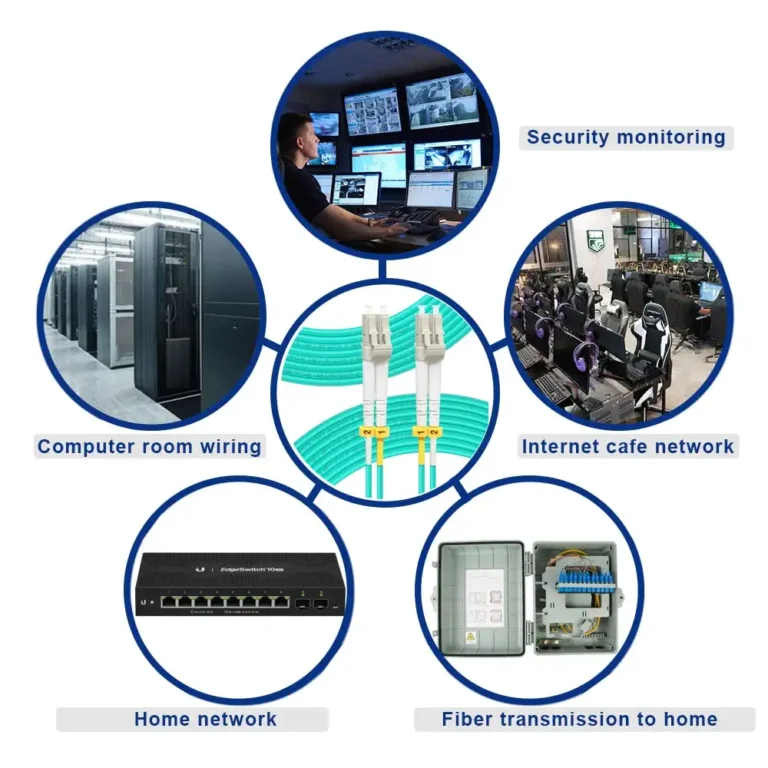
This cable is suitable for numerous networking environments, including:
- Enterprise backbone networks
- Building-to-building fiber links
- Outdoor communication systems
- FTTH deployments
- Campus networking
- ISP infrastructure
- Industrial automation
- Data center interconnections
- Security camera backbones
- Telecommunications networks
Each of these applications highlights practical situations where understanding single mode vs multimode can lead to a more effective network design.
| Specification | Details |
|---|---|
| Product Name | 250M LC to LC Outdoor Armored Duplex 9/125 SM Fiber Optic Cable Jumper Optical Patch Cord Singlemode |
| Cable Length | 250 Meters (820 ft) |
| Fiber Type | Singlemode (9/125) |
| Connector Type | LC/PC to LC/PC |
| Cable Design | Duplex Outdoor Armored |
| Jacket | Weather-Resistant Outdoor Jacket |
| Armoring | Metal Sheathing for Extra Protection |
| Signal Performance | Low Signal Loss |
| Connector Material | Ceramic Ferrule |
| Compatibility | Standard Fiber Optic Equipment |
| Best Applications | Outdoor Networking, FTTH, ISP, Industrial Networks, CCTV, Enterprise Backbone |
| Waterproof Cover | Yes |
| Direct Burial | Not Recommended |
| Overhead Installation | Not Recommended |
Single Mode vs Multimode: A Detailed Comparison
Selecting the correct optical fiber is not simply a matter of choosing the newest technology. Every networking project has different performance requirements, installation environments, transmission distances, and budget limitations. Understanding single mode vs multimode allows organizations to build networks that remain reliable for many years without unnecessary upgrades.
When comparing fiber optic single mode vs multimode, professionals usually evaluate several technical characteristics rather than focusing on only one specification.
| Feature | Single Mode Fiber | Multimode Fiber |
|---|---|---|
| Core Size | 9/125 µm | 50/125 µm or 62.5/125 µm |
| Light Source | Laser | LED or VCSEL |
| Maximum Distance | Tens of kilometers | Usually a few hundred meters |
| Modal Dispersion | Extremely Low | Higher |
| Signal Quality | Excellent | Good |
| Initial Equipment Cost | Higher | Lower |
| Long-Term Investment | Excellent | Moderate |
| Outdoor Networks | Highly Recommended | Limited |
| Enterprise Backbone | Excellent | Good |
| ISP Networks | Preferred | Rare |
From this comparison, it becomes easier to understand why single mode vs multimode fiber remains one of the most discussed topics in modern networking.
Core Diameter Makes a Big Difference
The biggest physical difference in single mode vs multimode is the core diameter.
A single mode fiber cable has a very small 9-micron core that allows only one light path to travel through the fiber.
Multimode fiber uses a much larger core, commonly 50 or 62.5 microns.
This larger core allows multiple light rays to travel simultaneously.
While this design makes multimode easier to connect with inexpensive light sources, multiple light paths also introduce modal dispersion.
Because of this phenomenon, fiber optic single mode vs multimode comparisons consistently show that multimode experiences greater signal spreading as transmission distance increases.
Signal Transmission
Signal quality is one of the strongest advantages of single mode vs multimode comparisons.
Since only one light beam travels through a single mode fiber cable, the optical signal remains much cleaner over long distances.
Advantages include:
- Lower attenuation
- Minimal dispersion
- Better stability
- Cleaner optical waveform
- Consistent transmission
These characteristics explain why telecom companies almost always choose single mode fiber cable products for national communication networks.
Multimode performs very well for shorter connections inside buildings, but performance gradually decreases over longer distances.
Transmission Distance
Perhaps the most recognized difference in single mode and multimode is transmission distance.
Singlemode networks commonly support:
- Several kilometers
- Metropolitan networks
- Campus infrastructure
- ISP backbone
- Carrier communication
- Long outdoor installations
Multimode networks typically serve:
- Office buildings
- Server rooms
- Equipment racks
- Small campuses
- Local network connections
For projects requiring hundreds of meters or several kilometers, single mode and multimode fiber comparisons almost always favor singlemode.
The featured single mode fiber cable measures 250 meters, making it an excellent choice for outdoor campus links, industrial environments, warehouses, and building-to-building communication.
Bandwidth Performance
Bandwidth determines how much information a fiber can carry.
One reason organizations increasingly choose single mode and multimode solutions based on future scalability is bandwidth potential.
Singlemode provides:
- Higher bandwidth capacity
- Better future compatibility
- Stable performance
- Lower signal degradation
Multimode provides:
- Excellent short-distance bandwidth
- High-speed LAN support
- Reliable indoor connectivity
Although both support Gigabit and faster networks, fiber optic single mode vs multimode comparisons reveal that singlemode scales much better as network demands continue growing.
Installation Environment
Network location strongly influences single mode vs multimode decisions.
Indoor offices often work well with multimode.
Outdoor infrastructure usually benefits from a single mode fiber cable because longer distances and environmental challenges require stronger optical performance.
Typical outdoor environments include:
- Factory campuses
- Universities
- Hospitals
- Distribution centers
- Government facilities
- Telecommunications towers
The armored construction of this single mode fiber cable provides additional mechanical protection in these demanding environments.
Understanding Modal Dispersion
Modal dispersion is a critical concept in fiber optic single mode vs multimode.
Multimode fiber allows many light paths.
Each path travels a slightly different distance.
Eventually, these light pulses arrive at different times.
This causes:
- Signal spreading
- Reduced clarity
- Shorter transmission distance
- Lower long-distance performance
A single mode fiber cable avoids most of these problems because only one light path exists inside the fiber.
This is why single mode vs multimode fiber comparisons consistently show better long-distance signal integrity for singlemode.
Cost Comparison
Many buyers initially compare purchase prices.
However, single mode vs multimode should consider total ownership cost instead of only cable price.
Initial Costs
Singlemode may require:
- Laser transceivers
- Higher-performance optics
- Professional testing
Multimode may require:
- Lower-cost transmitters
- Less expensive optics
- Simpler installations
Long-Term Costs
A quality single mode fiber cable often reduces:
- Future replacement costs
- Upgrade expenses
- Network redesign
- Additional infrastructure investment
For growing organizations, single mode vs multimode frequently becomes a long-term financial decision rather than a short-term purchasing decision.
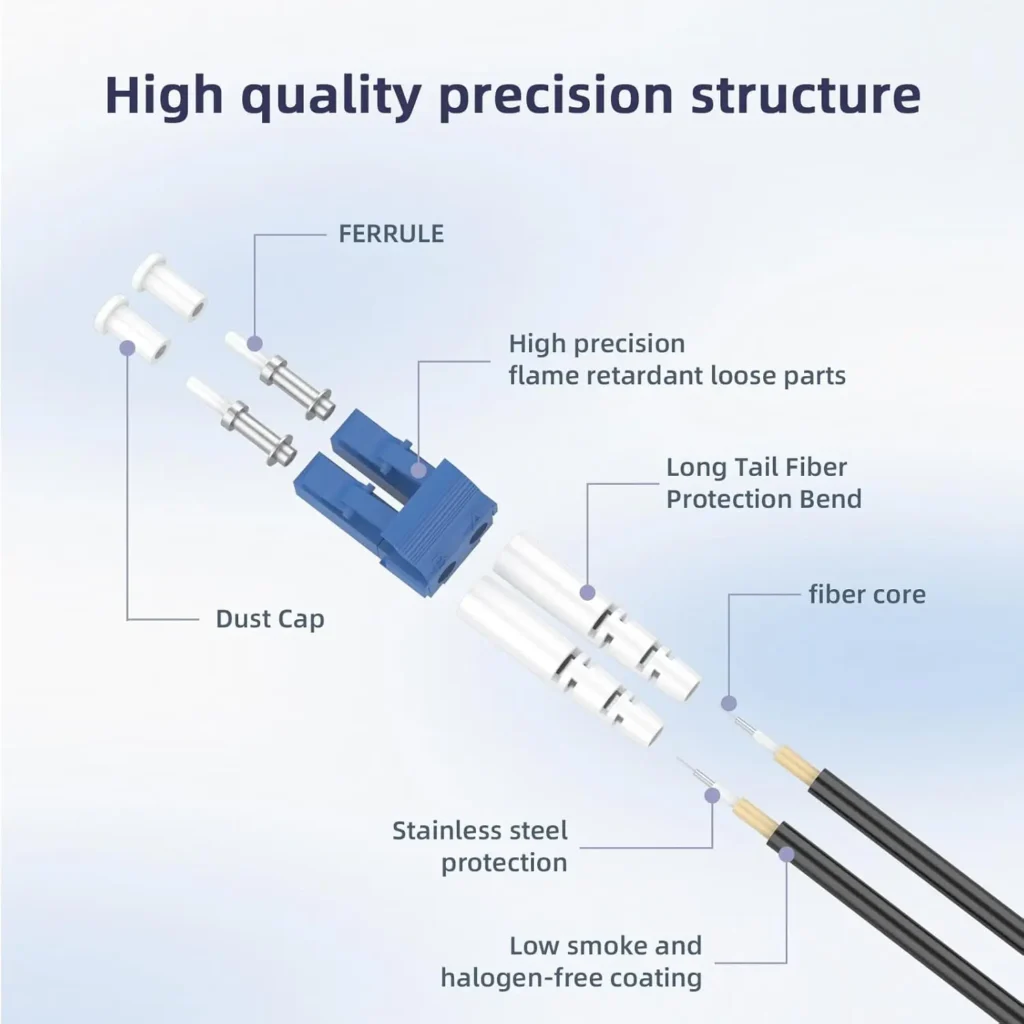
Outdoor Armored Cable Advantages
The featured cable includes several protective features that improve reliability.
Benefits include:
- Metal armored construction
- Better crush resistance
- Improved tensile strength
- Protection against accidental impacts
- Better durability during installation
These features make this single mode fiber cable suitable for professional outdoor deployments.
Its weather-resistant outer jacket protects against:
- Sunlight
- Rain
- Humidity
- Dirt
- Temperature variation
However, manufacturer recommendations clearly state that it should not be directly buried or installed as unsupported overhead cable.
LC to LC Connectivity
Modern enterprise networking frequently uses LC connectors.
The featured single mode fiber cable includes:
- LC/PC connector
- Duplex configuration
- Ceramic ferrules
- Factory-polished ends
Advantages include:
- Low insertion loss
- Excellent alignment
- High durability
- Reliable signal transmission
When evaluating fiber optic single mode vs multimode, connector quality is just as important as fiber quality.
Carrier-Class Testing
Every professional optical cable should undergo factory testing.
According to the specifications, this product is:
- Carrier-grade
- Factory tested
- Brand new
- Performance verified
Carrier-class testing increases confidence that the single mode fiber cable will operate immediately after installation without excessive signal loss.
Where Singlemode Performs Best
Organizations often select single mode vs multimode based on deployment size.
Singlemode performs exceptionally well in:
- Internet Service Providers
- Telecommunications
- University campuses
- Industrial automation
- Smart cities
- Military communication
- Transportation systems
- Healthcare infrastructure
- Outdoor surveillance
- Enterprise backbone networks
These industries require stable long-distance communication that a single mode fiber cable delivers efficiently.
Multimode Still Has Advantages
Although this guide emphasizes a single mode fiber cable, multimode remains useful.
Advantages include:
- Lower equipment cost
- Easy short-distance deployment
- Excellent data center connections
- Office LAN infrastructure
- Equipment rack interconnections
Therefore, single mode vs multimode fiber should always be evaluated according to project requirements instead of assuming one option fits every situation.
Polarization Maintaining Technology
Advanced optical laboratories often require polarization maintaining fiber.
Unlike standard singlemode products, polarization maintaining fiber preserves the orientation of polarized light throughout transmission.
Applications include:
- Scientific research
- Laser measurement
- Aerospace systems
- Medical imaging
- Optical sensing
- Quantum communication
Although this featured cable is a standard single mode fiber cable, understanding polarization maintaining technology helps professionals distinguish between commercial networking fiber and highly specialized optical fibers.
Real-World Example
Imagine two office buildings located 250 meters apart.
If future expansion is expected, choosing a single mode fiber cable today provides:
- Longer upgrade path
- Better bandwidth potential
- Improved outdoor durability
- Higher investment value
- Lower long-term replacement costs
This example clearly illustrates why discussions about single mode vs multimode extend beyond simple transmission distance.
Why This Product Is a Strong Choice
The 250M LC to LC Outdoor Armored Duplex 9/125 SM Fiber Optic Cable Jumper Optical Patch Cord offers an excellent balance of durability and performance.
Key highlights include:
- 250-meter length
- Duplex communication
- Outdoor armored construction
- Ceramic LC connectors
- 9/125 singlemode fiber
- Carrier-grade quality
- Factory tested
- Weather-resistant jacket
- Low insertion loss
- Excellent compatibility
For organizations planning dependable outdoor optical infrastructure, this single mode fiber cable represents a practical solution that aligns well with the technical advantages discussed throughout the single mode vs multimode comparison.
Buying Guide: How to Choose the Right Fiber Cable
Choosing the correct optical cable is easier when you evaluate your project requirements before making a purchase. The discussion around single mode vs multimode is not about which technology is universally better—it is about selecting the right solution for your specific environment.
Before purchasing any single mode fiber cable, consider the following factors:
1. Transmission Distance
Distance is one of the first considerations in fiber optic single mode vs multimode comparisons.
Choose singlemode if you require:
- Building-to-building connections
- Campus networking
- ISP infrastructure
- Outdoor communication
- Long-distance backbone links
Multimode is generally more suitable for:
- Office networks
- Equipment racks
- Server rooms
- Short indoor cable runs
2. Installation Environment
The installation location significantly influences the outcome of any single mode vs multimode fiber decision.
For outdoor environments, an armored single mode fiber cable provides additional protection against:
- Physical impacts
- Cable crushing
- Environmental exposure
- UV radiation
- Moisture
The featured 250-meter armored cable is specifically designed for outdoor applications with a weather-resistant jacket. However, it should not be directly buried or installed as an unsupported overhead line, following the manufacturer’s recommendations.
3. Connector Compatibility
Always verify connector compatibility before purchasing.
This product includes:
- LC/PC to LC/PC connectors
- Duplex configuration
- Ceramic ferrules
- Low insertion loss
- Reliable signal alignment
Selecting compatible connectors ensures that your single mode fiber cable integrates seamlessly with existing networking equipment.
4. Future Expansion
One of the biggest advantages discussed throughout single mode vs multimode comparisons is future scalability.
If your organization expects:
- More users
- Higher bandwidth
- Additional buildings
- Faster network speeds
then investing in a quality single mode fiber cable today can reduce upgrade costs later.

Installation Tips
Proper installation helps maximize the performance and lifespan of any fiber optic cable.
Recommended practices include:
- Avoid excessive bending.
- Keep connectors clean before installation.
- Use proper cable management.
- Protect connector ends with dust caps when not connected.
- Follow the manufacturer’s bend radius recommendations.
- Avoid unnecessary tension during installation.
- Secure the cable properly to prevent movement.
- Inspect connectors before connecting equipment.
These best practices help maintain the performance advantages discussed in fiber optic single mode vs multimode comparisons.
Maintenance Best Practices
Routine maintenance extends the service life of your optical infrastructure.
Maintenance checklist:
- Inspect connectors regularly.
- Clean fiber connectors using approved cleaning tools.
- Replace damaged protective caps.
- Monitor optical signal loss.
- Check for physical damage to the jacket.
- Verify connector alignment.
- Protect cables from unnecessary mechanical stress.
Proper maintenance ensures your single mode fiber cable continues to provide reliable performance over many years.
single mode vs multimode Common Mistakes
Many installation problems occur because basic planning steps are overlooked.
Common mistakes include:
- Choosing fiber based only on initial cost.
- Ignoring future expansion needs.
- Mixing incompatible connectors.
- Exceeding recommended bend radius.
- Installing outdoor cables incorrectly.
- Neglecting connector cleaning.
- Using incorrect transceivers.
- Confusing single mode vs multimode specifications.
Avoiding these issues helps maximize network reliability.
When Should You Choose Singlemode?
A single mode fiber cable is usually the preferred option when you need:
- Long-distance communication
- Outdoor deployment
- Carrier-grade performance
- Enterprise backbone connectivity
- High bandwidth potential
- Low signal attenuation
- Future network expansion
- Reliable industrial communication
These strengths explain why single mode vs multimode fiber discussions frequently conclude that singlemode is the better long-term investment for professional infrastructure.
When Is Multimode a Better Choice?
Despite the advantages of singlemode, multimode remains valuable for many projects.
Multimode is appropriate when:
- Distances are relatively short.
- Equipment costs are a priority.
- The network is contained within a single building.
- Future expansion is limited.
- Existing infrastructure already supports multimode.
Understanding these scenarios helps make fiber optic single mode vs multimode decisions based on technical requirements rather than assumptions.
Frequently Asked Questions (FAQ)
Is singlemode better than multimode?
The answer depends on your application. In most long-distance networking projects, single mode comparisons favor singlemode because it offers lower attenuation, greater transmission distance, and better scalability.
Can this 250M cable be used outdoors?
Yes. This single mode fiber cable is designed with an outdoor armored construction and a weather-resistant jacket for outdoor use. However, the manufacturer does not recommend direct burial or unsupported overhead installation.
What does 9/125 mean?
The numbers indicate the fiber dimensions:
- 9 µm core
- 125 µm cladding
This is the standard specification for a single mode fiber cable.
Why are ceramic connectors important?
Ceramic ferrules improve connector alignment, reduce insertion loss, and provide excellent durability, ensuring reliable optical performance.
What is polarization maintaining fiber?
Polarization maintaining fiber is a specialized optical fiber engineered to preserve the polarization state of light. Unlike standard networking fiber, polarization maintaining products are commonly used in scientific research, laser systems, aerospace, sensing applications, and advanced optical instrumentation where polarization stability is critical.
Is this cable compatible with standard fiber equipment?
Yes. The product is compatible with standard fiber optic equipment that supports LC connectors and singlemode operation.
Can this cable be used in industrial environments?
Yes. Thanks to its armored construction and durable outer jacket, this single mode fiber cable is well suited for factories, campuses, warehouses, enterprise networks, and other demanding environments.
Final Comparison
| Feature | Singlemode | Multimode |
|---|---|---|
| Long Distance | Excellent | Limited |
| Outdoor Deployment | Excellent | Moderate |
| Bandwidth Potential | Excellent | Good |
| Modal Dispersion | Very Low | Higher |
| Future Expansion | Excellent | Good |
| ISP Networks | Preferred | Rare |
| Enterprise Backbone | Excellent | Good |
| Equipment Cost | Higher | Lower |
| Long-Term Value | Excellent | Good |
This table summarizes the key points of single mode vs multimode, helping buyers quickly identify which option aligns with their networking goals.
Conclusion
Choosing between single mode ultimately depends on your network’s distance requirements, environment, scalability plans, and performance expectations. While multimode continues to serve many short-distance indoor applications effectively, single mode fiber cable solutions offer unmatched advantages for outdoor installations, enterprise backbones, ISP infrastructure, and long-distance communication.
The 250M LC to LC Outdoor Armored Duplex 9/125 SM Fiber Optic Cable Jumper Optical Patch Cord Singlemode 250Meters 820ft LC-LC demonstrates why professional installers increasingly prefer high-quality singlemode solutions. Its 9/125 fiber construction, LC/PC ceramic connectors, duplex configuration, carrier-grade testing, and rugged outdoor armored design make it a dependable option for demanding networking environments.
Throughout this guide, the comparison of fiber optic single mode has shown that transmission distance, signal integrity, bandwidth potential, and long-term investment are all important considerations. Likewise, understanding single mode vs multimode fiber enables organizations to make informed purchasing decisions that reduce future upgrade costs and improve network reliability.
Finally, while specialized technologies such as polarization maintaining fiber serve advanced scientific and industrial applications, standard singlemode fiber remains the preferred choice for most professional communication networks. By carefully evaluating your project requirements and selecting the appropriate optical cable, you can build a high-performance infrastructure that supports today’s connectivity needs while remaining ready for future growth.