Introduction
Marketing is the bridge between a business and the people it serves. It is not just about advertising a product — it’s about understanding customer needs, creating value, communicating that value effectively, and building lasting relationships. Whether you’re a small business owner, a student, or an aspiring digital marketer, understanding the Marketing Fundamentals Report is the first step toward building a successful brand.
This report breaks down the core concepts of marketing in a simple, practical way — covering the marketing mix, digital marketing channels, consumer behavior, branding, and modern strategy — so you can apply these principles to real-world business growth.
1. What Is Marketing?
Marketing is the process of identifying, anticipating, and satisfying customer needs profitably. According to the American Marketing Association, marketing is “the activity, set of institutions, and processes for creating, communicating, delivering, and exchanging offerings that have value for customers, clients, partners, and society at large.”
In simple terms, marketing answers three key questions:
- Who is our customer?
- What do they need or want?
- How can we deliver value better than competitors?
2. The Marketing Mix: The 4Ps (and Beyond)
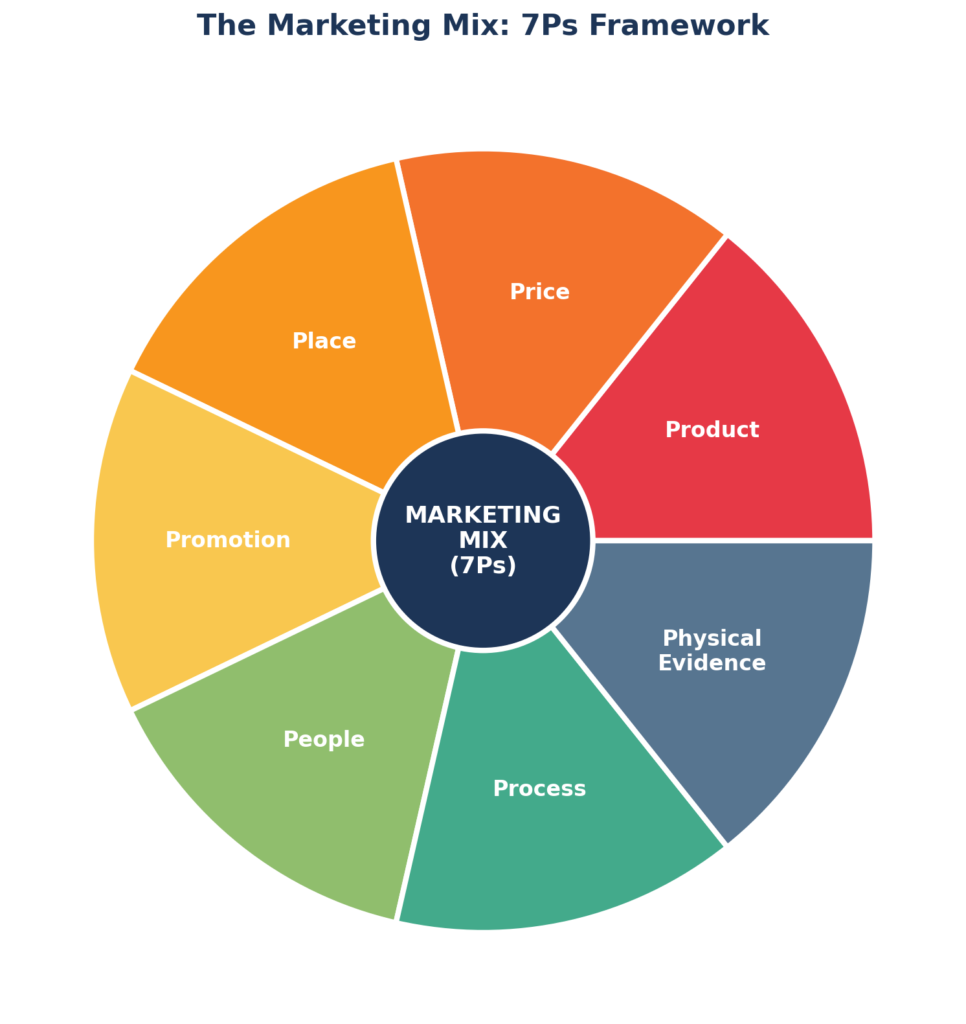
The marketing mix is the foundation of every Markets. The classic model includes four elements:
Product
What you’re offering — a physical good, service, or experience. It must solve a real problem or fulfill a genuine need.
Price
How much customers pay. Pricing strategy affects perceived value, profitability, and market positioning (e.g., premium pricing vs. competitive pricing).
Place
Where and how the product reaches the customer — physical stores, e-commerce, distribution channels, or online platforms.
Promotion
How you communicate your value proposition — advertising, content marketing, social media, PR, and sales promotions.
Modern marketing extends this to the 7Ps, adding:
- People – The team and customer service that shape the brand experience
- Process – The systems that deliver the product/service efficiently
- Physical Evidence – Tangible proof of quality (packaging, website design, testimonials)
3. Understanding Consumer Behavior
Successful marketing starts with understanding why people buy. Key factors influencing consumer decisions include:
- Psychological factors – motivation, perception, beliefs, and attitudes
- Social factors – family, social groups, and cultural influence
- Personal factors – age, occupation, lifestyle, and economic situation
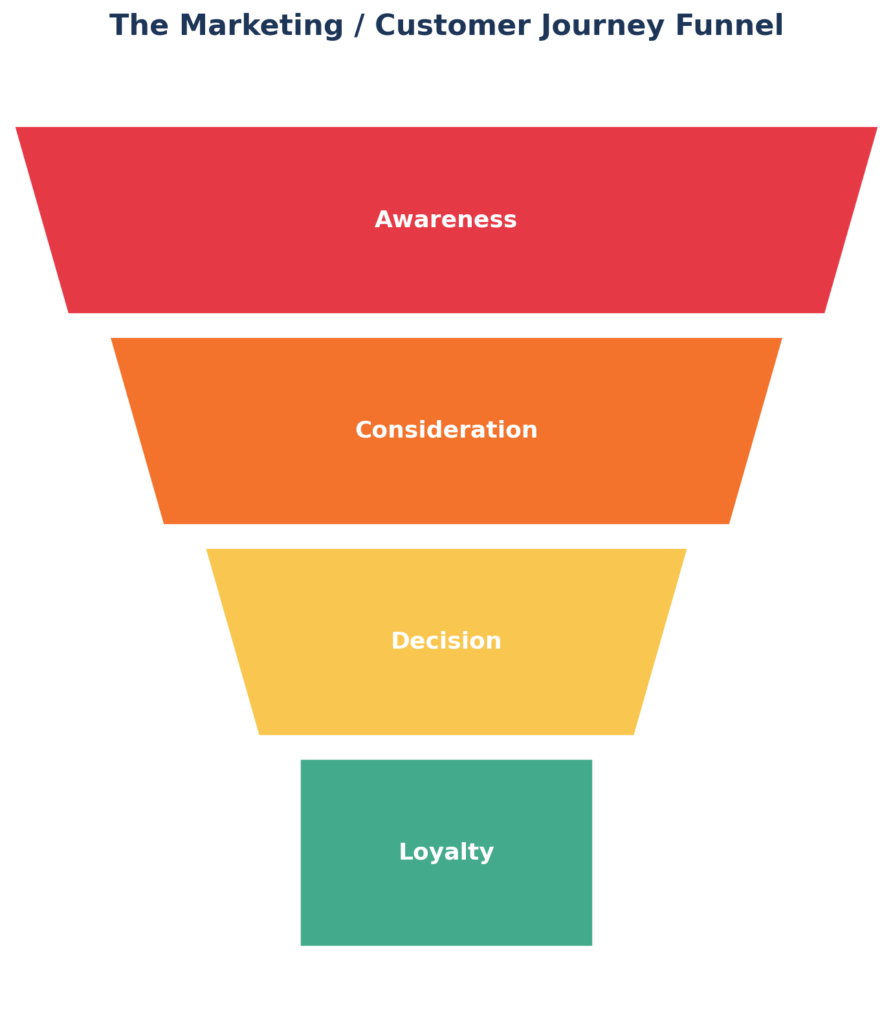
- Buying journey – awareness → consideration → decision → loyalty
Marketers use tools like customer personas and journey mapping to visualize and predict these behaviors, allowing for more targeted campaigns.
4. Digital Marketing: The Modern Toolkit
Traditional marketing has evolved into a digital-first ecosystem. The core pillars of digital marketing include:
Search Engine Optimization (SEO)
Improving website visibility on search engines like Google through keyword research, on-page optimization, technical SEO, and link building. SEO drives organic (unpaid) traffic and builds long-term credibility.
Content Marketing
Creating valuable, relevant content (blogs, videos, infographics) to attract and retain a clearly defined audience — ultimately driving profitable customer action.
Social Media Marketing
Using platforms like Facebook, Instagram, LinkedIn, and TikTok to build brand awareness, engage audiences, and drive conversions.
Email Marketing
One of the highest-ROI channels, used for nurturing leads, retaining customers, and promoting offers directly.
Pay-Per-Click (PPC) Advertising
Paid ads on Google, Facebook, or other platforms, where advertisers pay per click or impression to drive targeted traffic.
Google Business Profile & Local SEO
Optimizing a business’s local presence so it appears in “near me” searches and Google Maps — essential for local businesses.
5. Branding: Building Recognition and Trust
A brand is more than a logo — it’s the overall perception customers have of a business. Strong branding includes:
- A clear brand identity (logo, colors, tone of voice)
- A consistent brand message across all channels
- A defined unique selling proposition (USP)
- Emotional connection through storytelling
Brands that consistently deliver on their promise build trust — and trust drives customer loyalty and word-of-mouth growth.
6. Marketing Strategy: From Planning to Execution
An effective marketing strategy typically follows these steps:
- Market Research – Understand the industry, competitors, and target audience
- Goal Setting – Define SMART (Specific, Measurable, Achievable, Relevant, Time-bound) objectives
- Segmentation & Targeting – Divide the market and focus on the most valuable segments
- Positioning – Define how the brand should be perceived relative to competitors
- Execution – Launch campaigns across chosen channels
- Measurement & Optimization – Track KPIs (traffic, conversions, ROI) and refine continuously
7. Measuring Marketing Success
Data-driven marketing relies on key performance indicators (KPIs) such as:
- Website traffic and organic search rankings
- Conversion rate (visitors who take a desired action)
- Customer Acquisition Cost (CAC)
- Return on Investment (ROI)
- Customer Lifetime Value (CLV)
- Engagement metrics (likes, shares, comments, click-through rate)
Tools like Google Analytics, Google Search Console, and social media insights help marketers track these metrics and make informed decisions.
8. Essential SEO Terms Glossar
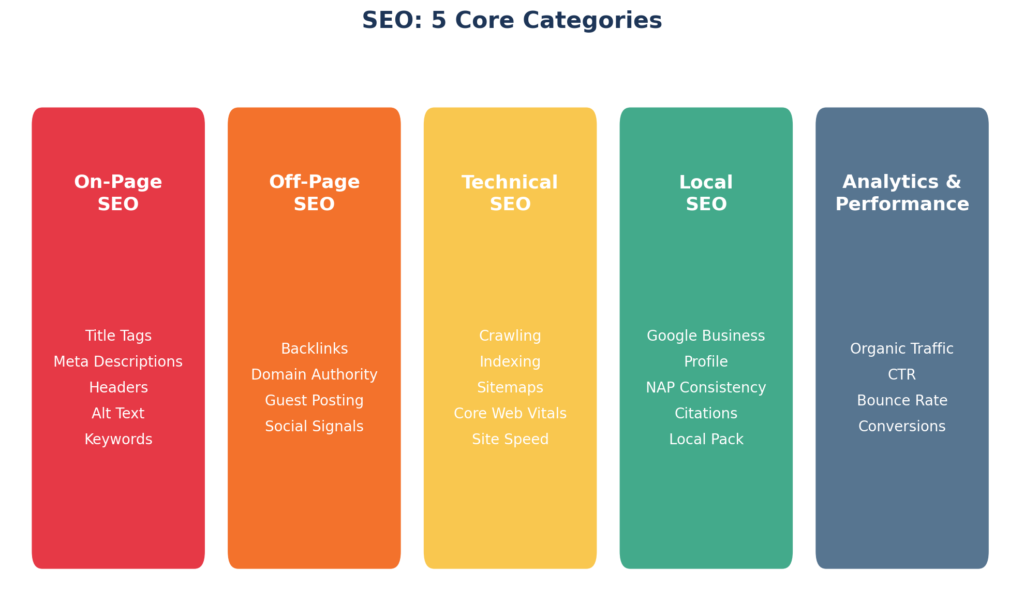
Since Search Engine Optimization is one of the most important pillars of digital marketing, here is a comprehensive glossary of key SEO terms every marketer should know:
On-Page SEO Terms
- Keyword – A word or phrase people type into search engines to find information
- Keyword Research – The process of finding and analyzing search terms people use
- Search Intent – The underlying goal behind a search query (informational, navigational, transactional, commercial)
- Title Tag – The clickable headline shown in search engine results
- Meta Description – The short summary text shown under a page’s title in search results
- Header Tags (H1, H2, H3…) – HTML tags used to structure content and signal hierarchy to search engines
- Alt Text (Alt Tag) – Descriptive text added to images for accessibility and image SEO
- URL Slug – The part of a URL that identifies a specific page in readable form
- Internal Linking – Linking between pages on the same website to distribute authority and aid navigation
- Keyword Density – The frequency of a keyword relative to total word count on a page
- Content Optimization – Refining content structure and wording to rank better for target keywords
- Canonical Tag – An HTML element that prevents duplicate content issues by specifying the preferred URL
- Featured Snippet – A highlighted answer box shown at the top of Google search results
- LSI Keywords (Latent Semantic Indexing) – Related terms and synonyms that support the main keyword’s context
Off-Page SEO Terms
- Backlink – A link from another website pointing to your site, used as a trust signal
- Link Building – The practice of acquiring backlinks from other websites
- Domain Authority (DA) – A score predicting how well a website will rank in search engines
- Page Authority (PA) – A score predicting how well a specific page will rank
- Anchor Text – The clickable, visible text of a hyperlink
- Guest Posting – Writing content for another website in exchange for a backlink
- Nofollow Link – A link tagged to tell search engines not to pass ranking credit
- Dofollow Link – A standard link that passes ranking authority (link juice)
- Link Juice – The value/authority passed from one page to another through links
- Social Signals – Engagement (likes, shares, comments) that indirectly influences SEO visibility
- Brand Mentions – Unlinked references to a brand name that can still influence search authority
Technical SEO Terms
- Crawling – The process by which search engine bots discover pages on the web
- Indexing – Storing and organizing discovered pages in a search engine’s database
- Sitemap (XML Sitemap) – A file listing all important URLs to help search engines crawl a site
- Robots.txt – A file that tells search engine crawlers which pages to access or avoid
- Site Speed / Page Load Time – How quickly a webpage loads, a key ranking factor
- Core Web Vitals – Google’s metrics for user experience (loading speed, interactivity, visual stability)
- Mobile-Friendliness – How well a site performs and displays on mobile devices
- Schema Markup (Structured Data) – Code added to a site to help search engines understand content and enable rich results
- HTTPS/SSL – Secure site protocol that is also a Google ranking signal
- 404 Error – A “page not found” error indicating a broken or missing link
- 301 Redirect – A permanent redirect from one URL to another
- Crawl Budget – The number of pages a search engine will crawl on a site within a given timeframe
- Duplicate Content – Identical or near-identical content appearing on multiple URLs, which can hurt rankings
Local SEO Terms
- Google Business Profile (GBP) – A free listing that helps businesses appear in local search and Maps results
- NAP Consistency – Ensuring a business’s Name, Address, and Phone number are identical across all listings
- Local Citation – Any online mention of a business’s NAP information, even without a link
- Geo-Targeting – Optimizing content and ads to reach users in a specific location
- Local Pack – The block of 3 local business listings shown at the top of Google search results
Analytics & Performance Terms
- Organic Traffic – Visitors who arrive at a website through unpaid search results
- SERP (Search Engine Results Page) – The page displayed by a search engine after a query
- CTR (Click-Through Rate) – The percentage of people who click a link after seeing it
- Bounce Rate – The percentage of visitors who leave a site after viewing only one page
- Dwell Time – How long a visitor stays on a page before returning to search results
- Conversion Rate – The percentage of visitors who complete a desired action
- Impressions – The number of times a link or ad appears in search results
- Ranking Position – Where a page appears in search results for a given keyword
- SEO Audit – A comprehensive analysis of a website’s SEO health and performance
- Black Hat SEO – Manipulative tactics that violate search engine guidelines (e.g., keyword stuffing, cloaking)
- White Hat SEO – Ethical SEO practices that follow search engine guidelines
- Gray Hat SEO – Tactics that fall between fully ethical and manipulative practices
Conclusion
Marketing Fundamentals Report — from the 4Ps to digital channels like SEO and social media — form the backbone of every successful business strategy. In today’s competitive digital landscape, combining timeless marketing principles with modern data-driven techniques is the key to sustainable growth. Businesses that understand their customers, communicate value clearly, and continuously optimize their approach will always have the advantage.
This report was prepared as part of a professional marketing fundamentals study, combining core marketing theory with practical digital marketing applications.